





Ibogaine Therapy Safety: Medical Risks and Screening Protocols
The Sanctuary of Science: A Journey Into ibogaine safety protocols
The cold autumn morning David walked through our clinic doors remains etched in our minds, a quiet man desperate to break free from years of severe opioid dependence. His arrival sparked a ten-year mission for our medical team, driving us to build the strict ibogaine safety protocols required to shield vulnerable lives. By mapping the delicate boundaries of this intense botanical compound, we shaped a protective framework that puts human life above all else.
We share this hard-won knowledge to offer clinical directors, practitioners, and worried families a clear map of the physiological dangers and necessary defenses. We detail the precise nature of ibogaine side effects, the necessity of constant medical oversight, and why thorough patient evaluation is the single most vital factor in saving lives.
By grasping these complex biological mechanisms, physicians can shift this powerful root from a hazardous gamble into a carefully governed therapeutic tool.
Many searching for alternative addiction therapies assume safety is a simple feature of the medicine rather than a direct outcome of meticulous clinical care. True safety depends entirely on enforcing precise ibogaine safety protocols that respect the patient as a fragile, highly complex biological system.
The Cardiac Sentinel and David’s Heart
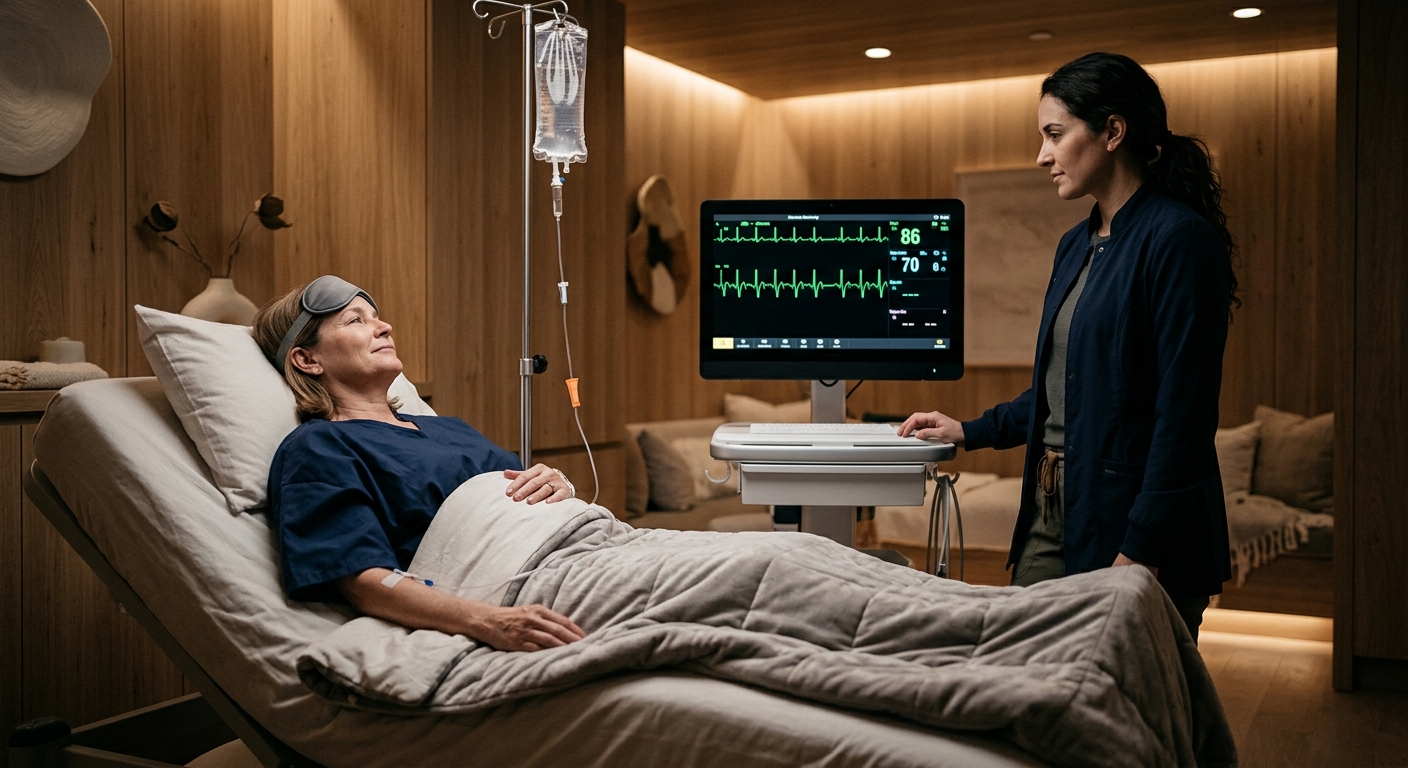
David lay still in the dimly lit room while the cardiac monitor hummed a steady rhythm, our team keeping watch through the long hours. The initial phase of his session felt peaceful, but as the alkaloid reached its peak concentration, the QT interval on the screen began to stretch. This visual shift, showing the blockade of hERG channels, was a stark reminder of the immense physiological forces at play.
The core danger to the cardiovascular system stems from how the compound blocks potassium channels within the heart muscle cells. Under this blockade, the heart muscle requires more time to reset its electrical charge between beats, leading to QT prolongation. This delay can spark a chaotic, lethal arrhythmia known as Torsades de Pointes, demanding instant emergency intervention.
Our medical staff kept vigil, adjusting David’s position and keeping emergency supplies like intravenous magnesium sulfate at arm’s reach. We knew that ibogaine side effects extend far beyond intense psychological visions, causing massive shifts in the autonomic nervous system. By watching the real-time telemetry feed, we navigated his brief heart rate drop and kept his vitals within safe bounds.
The Screening Crucible: Honoring ibogaine safety protocols
David’s successful outcome was decided weeks before his session during our exhaustive diagnostic phase. We have learned that a strict ibogaine medical screening protocol serves as the first line of defense against severe medical emergencies. This vetting begins with an exhaustive review of the patient’s cardiovascular history to rule out congenital electrical issues or structural heart diseases.
Our team also demands a genetic breakdown of the patient’s liver enzymes, focusing on the CYP2D6 pathway. This particular pathway processes the main alkaloid into its active form, noribogaine, which lingers in the tissues for days. People who process this compound slowly face a much higher danger of drug buildup and extended heart vulnerability.
Our medical team relies on a strict checklist of diagnostic requirements that every candidate must clear before receiving approval:
- Three separate 12-lead electrocardiograms to measure baseline electrical intervals across different hours.
- A full metabolic panel to confirm that potassium, magnesium, and calcium levels sit firmly in the upper healthy range.
- A thorough liver function assessment to prove the organ can handle the heavy metabolic load of the alkaloid.
- A psychiatric interview to detect conditions like bipolar disorder or schizophrenia that might worsen during the session.
The Architecture of a Safe Treatment Space
We built our clinical space to feel like a warm sanctuary, hiding the machinery of an intensive care unit beneath a calm exterior. This setup helps patients feel emotionally safe while giving our medical team instant access to life-saving gear. A quiet, soothing room lowers patient anxiety, directly helping to keep heart rates steady during the session.
Nurses track vital signs on a strict timetable, checking blood pressure, oxygen levels, and pulse every half hour during the peak. We keep an open intravenous line in place from the start until the patient can walk steadily on their own. This immediate access allows us to administer fluids or emergency drugs without losing a single second.
To guarantee safety, our team adheres to a strict order of operations during the dosing process:
- Giving a tiny test dose to rule out rare, immediate allergic reactions or extreme sensitivity to the drug.
- Keeping the patient flat in bed to prevent sudden blood pressure drops from movement.
- Limiting movement and keeping the room dark to prevent adrenaline spikes that could trigger heart arrhythmias.
- Running continuous intravenous fluids with balanced minerals to protect kidney function and ease the liver’s workload.
Stratifying Clinical Risks
Over years of clinical work, we have mapped out distinct risk categories to guide our medical choices. This structured approach shields high-risk patients from danger while ensuring moderate-risk candidates get specialized care. The data below shows how we assess and react to different patient situations.
| Risk Category | Clinical Presentation | Protocol Requirement |
|---|---|---|
| Low Risk | Normal baseline electrocardiogram, excellent electrolyte balance, and no family history of sudden cardiac arrest. | Standard continuous telemetry monitoring and baseline post-treatment observation. |
| Moderate Risk | Borderline electrolyte levels or mild liver enzyme elevations without structural heart disease. | Aggressive pre-treatment mineral loading and extended forty-eight hour post-treatment monitoring. |
| High Risk | Prolonged resting QT interval, severe hepatic impairment, or active psychiatric conditions. | Absolute exclusion from treatment to prevent severe adverse events. |
The Vital Role of Electrolyte Equilibrium
One of our major discoveries was realizing how incredibly fragile mineral balance is in people seeking recovery. Years of substance dependence often leave individuals malnourished and depleted of vital minerals. Introducing a strong hERG channel blocker to a depleted system raises the danger of sudden heart rhythm failures dramatically.
To fight this danger, we enforce a mandatory forty-eight hour preparation window focused entirely on restoring minerals. We give oral potassium and magnesium supplements, checking blood levels daily to ensure they reach healthy peaks. This straightforward step acts as an electrical shield, stabilizing the heart muscle against the destabilizing impact of the drug.
The link between mineral levels and heart safety is a core rule of our clinic, and we never make exceptions. A tiny drop in potassium can significantly increase the risk of QT interval prolongation during the peak of the session. Our clinical experience proves that early mineral replacement is the most reliable way to guarantee patient safety throughout this intense therapy.
Navigating the Neurological and Emotional Landscape
While physical dangers require intense medical vigilance, the neurological effects demand equal gentleness. The compound interacts with a wide web of brain receptors, including nicotinic, NMDA, and serotonin pathways. This vast neurochemical footprint triggers a deep state of waking dreams, bringing buried memories and old traumas to the surface.
We sat with David as he navigated these heavy inner landscapes, processing decades of pain behind closed eyes over several hours. Our therapists stayed by his side, offering a quiet, reassuring presence without interfering in his internal work. This emotional support is crucial, since sudden panic or panic attacks can spike heart rates and blood pressure, putting dangerous stress on the heart.
To help ease the emotional journey, we use several comforting practices during the active hours of the session:
- Playing soft, wordless music to anchor the patient during shifts between different visions.
- Offering gentle, grounding touch, like holding a hand, during intense emotional releases.
- Keeping the room dark and silent so the brain can process inner imagery without outside distractions.
- Keeping a skilled therapist in the room at all times to soothe any sudden waves of anxiety.
The Crucible of Recovery and Integration
As the intense dream state faded after twenty-four hours, David entered the vital phase of physical and mental recovery. The body is often exhausted at this stage, needing close care while the liver clears the remaining active metabolites. Our medical staff continues to track the heart rhythm and vital signs during this sensitive transition.
The active metabolite, noribogaine, lingers in the body far longer than the original drug, keeping the brain open to change for weeks. This window of high neuroplasticity offers a precious chance for patients to rewrite old behavioral loops and form new habits. We use this receptive time to run deep therapy sessions, helping patients turn their visions into real, daily life changes.
Our aftercare plan is designed to nurture both physical healing and psychological growth during this sensitive window:
- Holding daily talk therapy sessions to decipher the symbols and emotions from the session.
- Serving light, nutrient-rich meals full of amino acids to help cell repair and brain recovery.
- Encouraging short, gentle walks outside to help ground the body and restore physical balance.
- Setting up a solid long-term plan that links the patient with local therapists and support circles.
The Path Forward: Clinical Excellence as a Standard
Looking back on David’s path, we see a clear road for the future of this unique treatment. His transformation was truly incredible, but it only happened because of our deep commitment to safety. We must move away from informal, unregulated backrooms and embrace the strict standards of modern medicine.
By treating ibogaine treatment guidelines as the foundation of therapy rather than a hurdle, we can protect vulnerable patients from harm. This shift requires clinics everywhere to invest in proper cardiac monitors, skilled medical staffs, and deep screening steps. Only then can we offer this powerful tool with the confidence and safety that patients like David deserve.
Here are the core safety pillars that must guide every clinical treatment:
- Exhaustive medical screening beforehand, covering cardiac rhythms, genetic pathways, and liver health.
- Continuous, real-time heart monitoring by qualified medical staff throughout the active session.
- Early mineral balancing to protect the heart against hERG channel blockade risks.
- A quiet, low-stimulation room combined with deep mental preparation and long-term integration work.
The future of addiction care lies in combining the deep healing power of nature with the safety and precision of modern medicine. By holding ourselves to the highest clinical standards, we can open new doors of hope for those who have run out of choices. This disciplined, scientific path is the only way to ensure this potent therapy is delivered safely and reliably.


About author

Add comment